Thursday, January 26, 2023

Annie's Rap

 HE SETTLERS WANTED TO MAKE NEW HOME

SO ACROSS THE APPALACHIAN THEY DECIDED TO GO

THE INDIANS GOT ANGRY SO OUT BROKE A WAR

AT LEAST THE FRENCH DON'T HAVE ALL THAT LAND ANYMORE


KING GEORGE WANTED TO COMPROMISE

BUT THE COLONISTS REFUSED TO APOLOGIZE

SO ACROSS THEY WENT AGAIN

THEY WERE CONFIDENT BUT THEN

THEY WERE PUT IN DEPT AND COULDN'T MAKE A BARGAIN


SO KING GEORGE STARTED UNFAIR TAXES

ON THINGS LIKE SUGAR AND MOLASSES

ON PAPER, STAMPS, AND ENVELOPES

AND TAX COLLECTORS COULDN'T COPE


THE TAXES STARTED VIOLENCE

 THEY COULDN'T TAKE THE SILENCE

THEY PUSHED AND SHOVED, A GUN WENT OFF

PEOPLE THOUGHT IT WAS BECAUSE OF A SCOFF


THE TEA ACT MADE EAST INDIA LOTS OF RICHES

AND WITH THE OTHER TAXES THE WOMEN HAD TO DO THEIR OWN STITCHES 

JUST PAY THE TAX OR NO TEA THEY SAID

AND DON'T COMMIT TREASON OR YOUR BE HUNG OR BEHEAD


BARRELS OF TEA WERE THROWN INTO THE OCEAN

THE SONS OF LIBERTY CAUSED QUITE THE COMMOTION

THEY DRESSED UP AS THE MOHAWK TRIBE

IT MUST HAVE BEEN HARD TO DESCRIBE

BECAUSE ALL THESE PEOPLE WERE ON THE PATRIOTS SIDE


THE INTOLERABLE/COERCIVE ACTS

BROUGHT BRITISH SOLDIERS INTO PEOPLES HOUSES

-IT MUST HAVE BEEN PACKED

THEN THEY BLOCKADED THE HARBOR

JUST WHEN YOU THOUGHT THEY COULDN'T PUSH IT ANY FARTHER-


THE PATRIOTS REALLY WANTED TO GAIN ALL OF THEIR RIGHTS BACK

SO THEY WROTE A PETITION JUST TO GET KING GEORGE ON THE RIGHT TRACK

THEY WANTED THE RIGHT TO GATHER TOGETHER

AND THEY EVEN SET FOR PARLIAMENT TO ANSWER


AT THE BATTLE OF LEXINGTON AND CONCORD WAS VERY UNWISE

BECAUSE THE BRITISH FAILED TO STEAL THE SUPPLIES

ONCE THEY CAME THE STARTED TO FIGHT A WAR

BUT WHEN THEY CAME BACK ALL THE GUNS WENT OUT THE DOOR


SO THE PATRIOTS FORMED A STRONG ARMY

Now, let's hope they are set free!

Monday, January 23, 2023

Kiran's Rap

 First we start with the French and Indian war, the British just can’t take any more,

 so their leader King George set a Proclamation,

 about precipitation,

 that the land way west appalations, 

belonged to the Native nations. 

Then the colonists were like NO!

 So they decided to not listen bro. 

King George needed them to pay him back for the war,

 but they didn't listen anymore,

 so  King George taxed them on sugar and paper and more,

 which led to the Boston Massacre!

 The colonists still didn't listen for a fact, 

then became the tea act! 

King George now has taxes on tea, 

and the colonists still aren't free!

 Now the colonists are seeking revenge because everything's harder,

 they throw the tea into the Boston Harbor.

 To confess, here’s the First Continental Congress

! Before the second Continental Congress, the Battle at Lexington and Concord was here to arrest. 

Uggg, now the battle of Bunker Hill, the colonists lost because they had no bullets to refill. What will happen now? 

I mean, how?


Tuesday, January 10, 2017

Parent Blog Question


WELCOME TO OUR BLOG
Classrooms have come a long way. There’s been an exponential growth in educational technology advancement over the past few years. From overhead projectors, to SMARTBOARDS,  to iPads, we’ve certainly come a long way but some things seem hauntingly similar to many years ago. For example, Thomas Edison said in 1925 that “books will soon be obsolete in schools. Scholars will soon be instructed through the eye.” I’m pretty sure this is exactly what people are saying these days about the iPad.
 1890 – Chalkboard

 1900 – Pencil

 1925 – Film Projector

 1925 – Radio

 1930 – Overhead Projector

 1940 – Ballpoint Pen

 1940 – Mimeograph
1950 – Headphones

1951 – Videotapes

Does anyone still have a VCR?
1958 – Educational Television
1959 – Photocopier

1965 – Filmstrip Viewer

 1970 – The Hand-Held Calculator

1972 – Scantron

1980 – Plato Computer

1985 – Hand-Held Graphing Calculator

1999 – Interactive Whiteboard

2005 – iClicker

2006 – XO Laptop

2010 – Apple iPad

APPS, Google Docs, Facebook, Twitter, SKYPE, Blogging, Podcasting, Etc.
Just like the original school slate, could the iPad bring Thomas Edison’s statement to life? Could the iPad make it so “scholars will soon be instructed through the eye.” Only time will tell.
Please choose a prompt to respond to for our students..
What do you remember to be considered technology in your classroom growing up?  
Would you like to be a student now...why or why not?
Can you imagine creating a facebook page for a major character in a novel you are reading in English class and then having to update that page daily as if you were that character?
What about blogging with your peers about the daily lessons?
How about skyping with the famous figure in which you are writing a report about?

Thursday, January 9, 2014

Step 1:


The blog, "Humanities Road to the Revolution", provides a meaningful and collaborative way to use technology.   The blog is designed to enrich learning about the events leading up to the American Revolution through primary and secondary print sources and artwork.  It  also provides an opportunity for our community to learn from one another as students from all pods. Parents are encouraged to join in our discussions.   The hope is that you will recognize that British and American points of view differed greatly through the Pre-Revolutionary time period. These differing points of view will encourage you to take a stance and support your opinions with factually based evidence from class lessons and readings. You will then distinguish between these points of view and explain how different perspectives and ideas
played an important role in the causes and events leading to the American Revolution. This is an opportunity to exchange or express opposite views with history and others in a respectful manner. 


In the comment section below, tell me at this point what you know about the American Revolution.  Have you heard or do you have an opinion regarding the war at this point?  Would you have supported the war, why or why not?  

Sunday, December 29, 2013

Step 2


Boycotting and Smuggling Stories
My name is Esther, and I am a Daughter of Liberty.
When the British decided to tax all of our paper with
the Stamp Act, I thought of a way that I could help my
friends and neighbors boycott other British goods. I
thought, "Maybe we have to buy their paper, but we
don't have to buy their cloth!" I worked day and
night, in a small room at the back of my house so
British soldiers wouldn't see me. In there, I spun
homemade cloth so that other women could use it to make
clothes for their families. Thanks to me and other
women, less British cloth was bought and sold.

My name is Richard, and I am a tea merchant. I was
so upset when the British parliament told us that we must
pay a tax on all paper! When did anyone tell the British
parliament what we thought or wanted? Well, if we have
to pay Britain extra money for paper, I know how to at
least give them less money for tea. There are many Dutch
ships that come by, and they are loaded with tea. Even
better, their tea is less expensive than the British tea. I
have to meet the ship captain in the middle of the night,
but it's worth it when I think of all the money Britain is
NOT getting, thanks to our smuggled tea from the Dutch!

My name is Louis. Even though I am 7 years old,
my mother tells me I can be a Patriot too. I am
going to boycott all paper goods I don't need.
I don't play with cards anymore, and Mom can't
bake as many sweets for us now. But I know I am
standing up for what is right.


Saturday, December 28, 2013

Step 3


Look at the picture below. Do you think this cartoon was made by a colonist patriot or a British
loyalist?Comment by providing 3 facts to support your reason..

Friday, December 27, 2013

Step 4


The Boston Massacre (Redcoats/British Soldier Account)
The Boston Massacre was a tragic event in the history of the colonies. What could have been a
minor arrest turned into the death of several young men.
It began when a young barber’s apprentice, Edward Garrick, shouted an insult at Hugh White, a
British soldier. Edward threatened the soldier and acted like he was going to punch him. When Edward
got too close to Mr. White, the soldier hit the boy on the ear with the end of his rifle. The teenager yelled
for help, insulted the soldier again, and ran off. As he was running, he yelled for other colonists to come
help him fight the soldier. He came back with a large and angry crowd, mostly teenagers. Edward
pointed at Hugh White and yelled, “There’s the guy who knocked me down!”
Nearby, at a church, someone started ringing the bells. One of Edward’s friends was trying to
excite a crowd and start a fight. More people came out into the street. Some had clubs, others had sticks
and rocks. They were ready for a fight.
The British soldier quickly saw that he was surrounded by an angry mob of people. He called for
help, and six other soldiers came to his side. Soon, their leader, Captain John Preston, came. The
soldiers’ guns were unloaded, but their bayonets were attached to their guns. They didn’t want to kill
anyone, but they had to protect themselves.
Meanwhile, the crowd was now over 400 men. They started throwing rocks, snowballs, and ice
chunks at the group of seven soldiers. An African-American named Crispus Attucks led the mob, and
they kept coming closer to the soldiers. They insulted the soldiers and threatened them. The soldiers had
a hard time seeing what was going on, because so many things were being thrown at them, and the snow
in their faces kept them from looking at the teenagers.
The soldiers loaded their guns to try to make the crowd go away. They wanted to warn the
teenagers first. Instead, the mob started yelling, “Come on, you rascals, you lobster scoundrels! Fire if
you dare! We know you won’t!” The crowd started saying bad words at the soldiers and threatening
them.
Some of the teenagers had clubs and cutlasses, and they started swinging them at the soldiers.
One of the teenagers threw a club at a soldier, knocking him down. The soldier got back up, and started
to fire at the crowd. Even though the captain didn’t give orders, other soldiers started firing too. They
were trying to protect their lives, and they were outnumbered 400 to 7. In the end, they killed three men
and wounded two others who died later on. The mob finally ran away. Luckily, none of the soldiers were
killed, although many were bruised and hurt from the teenagers. As the gunsmoke cleared, Crispus
Attucks and four others were dead or dying. Six more men were wounded, but they survived.

Boston Massacre (Patriot Account/Colonist Account)

The Boston Massacre was a tragic event in the history of the colonies. Later on, Americans
would see how it was the start of the American Revolution. It was a sign that British did not like the
colonists, and did not treat them fairly.
It started when a teenager named Edward Garrick was walking with three of his friends. They
came to a house where a soldier was carrying a huge sword. The soldier was sticking the sword out at
people, and another mean-looking man had a large club and was standing with him. Edward told one of
his friends, Merchant, to take care of his sword. The soldier hit Edward, and then pushed Merchant and
cut him with his sword. Merchant hit the soldier with a tiny stick. The soldier’s friend ran back into the
house and brought out two other soldiers, one with a pair of tongs, and the other with a giant shovel. The
soldier with the tongs chased Edward through an alley and started beating him with the tongs.
Soon, all the noise made people come out to see what was happening. A young boy named John
Hicks knocked the soldier down, but helped him get back up. Other boys came out and they chased all
the soldiers back to the house, where they surrounded them. In less than a minute, ten or twelve soldiers
came out of the house with cutlasses, clubs, and bayonets. The unarmed boys stood there for a while, but
since they didn’t have any weapons, they ran away.
Meanwhile, a man named Samuel Atwood had heard all the noise, and he came out of his work
building to see what was the matter. He met the soldiers and asked them if they were going to murder
people. “Yes, we sure will!” they said. One of the soldiers hit Mr. Atwood with a club. Another soldier
hit him, and Samuel tried to run away. As he was running, another soldier cut him all the way to his
shoulder bone!
At this point, the soldiers started attacking unarmed people left and right. Thirty or forty boys
started gathering in the streets to protect each other. The captain of the soldiers, Captain John Preston,
cried, “Make way!” All the soldiers started running with their bayonets out. Many of the boys got out of
the way, but many others got poked by the bayonets’ sharp points. Some of the teenagers started
throwing snowballs at the soldiers to keep themselves from getting stabbed.
When the Captain saw this, he told his soldiers to fire at the boys. Only one soldier fired, but a
brave colonist took a club and hit him on the hands so hard, that he dropped his gun. The other soldiers
started shooting at the boys. When the smoke cleared, the soldiers found three men dead and two others
struggling for life. Some of the boys tried to pull their dead friends away, but the British soldiers kept
shooting at them! In the end, five men died and six others were wounded. It was a sad example of
pointless violence.


Friday, December 20, 2013

Step 5


Have you ever had military personnel stay on your property? How would you feel if you were told you were required to do so? Most people would find it intrusive. I know I would. In 1774, the second quartering act was passed, requiring colonists to house British troops. Loyalists, people who were loyal to the king, would have had fewer problems with the idea. The rest of the colonists seethed at the thought. “Why should I provide room and board for someone who is here to make sure I do not have my freedom?” may have been what many thought when this act was forced upon them. This would have rung true especially in places with limited resources.
I used to think that these soldiers were staying within private homes. Upon further research, I learned that the soldiers actually stayed in barns, warehouses, empty homes and buildings. However, if act passed today forcing our military men and women, I don’t have a barn or any other type of habitable outbuilding. Even if I had such a building, or soldiers stayed in my neighbors’ detached garages, I would be anything but happy. I would expect the headlines of newspapers to say something about big brother is watching.
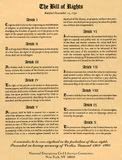
Fortunately, we don’t have to provide room and board for our military, unless we are in the middle of a war. It’s outlined in the Bill of Rights that only during war can soldiers be quartered in “any house,” and only “in a manner to be prescribed by law.”

.Dear Diary Entry
The video is representing what might have happened had a person named Mr. (or Ms.)
Redcoat decided to live with you without your permission. Compose a diary entry explaining what it is like to have a complete stranger living with you:
 where Mr. Redcoat will sleep, what Mr.
Redcoat will eat, what things Mr. Redcoat might do around the house, and how that affects the
you & your  family. Mr. Redcoat should also be obviously nosy; he goes through the family's
mail, looks in the family's drawers and closets, and eavesdrops on the family conversations.  Show how you would feel.


Monday, January 28, 2013

Step 6

Step 6:  


Boston Tea Party Role Play Instructions :
If your last name begins with letters A-D you will be a Participant.
Letters E-K will be a Patriot Bystander
Letters L-P will be a Loyalist Bystander
Letters Q-Z will be a Tea Merchant.
Respond in the blog according to the below prompts...

Participant
In your discussion, you must convince the others of your group that the
British were wrong in trying to tax American colonists for tea.  There is
no taxation without representation, and no matter how low the British
make the price of tea, as long as there's a tax with it, Americans should
refuse to buy it.  The British cannot force American colonists to buy
anything, especially when colonists don't have a voice in Parliament.
Patriot Bystander
In your discussion, you must convince the others of your group that the
Sons of Liberty who participated in the Boston Tea Party should not be
punished.  While you didn't do anything, and you should not be
punished, neither should the Sons of Liberty.  They stood up for your
rights, and the British have no right to force a tax on colonists.  There is
no taxation without representation!
Loyalist Bystander
In your discussion, you must convince the others of your group that the
Sons of Liberty were wrong and destructive.  They should be punished,
because they are causing the King to pass more laws that take away
colonists' rights.  The colonies had lots of rights before some of the
patriots began to disobey the King!  If those few trouble makers are
punished, maybe everything will become normal again.
Tea Merchant
In your discussion, you must convince the others of your group that you
have been hurt the most by this Boston Tea Party.  You live in the
colonies, and things seem OK.  Americans seem to have a pretty good
life here.  But now you have lost so much money, because your entire
shipment of tea was destroyed.  How are you supposed to feed your
family?  Who will pay you back?  This isn't fair!

Wednesday, January 9, 2013


REVOLUTIONARY RAP
The thirteen colonies in America
Were ruled by England’s king.
The colonists were so happy
The king’s praises they did sing.
Then he began to change things
That were not one bit funny.
He started to tax them
Which means they paid extra money.
As King George made new laws
New taxes he began to shout.
Many colonists became upset
And some even spoke out.
And that is when it happened
The king taxed the tea.
But it wasn’t quite a tea party
This you will plainly see.
Some colonists boarded ships
On a cold day in December.
They dumped 250 chests of tea
This you must remember.
The Redcoats came from Britain
It was order they wanted to keep.
Colonists formed the minutemen
And kept watch to hear one peep.
Paul Revere was paying attention
To see how many lights shone.
When he saw the lights he leapt on his horse
And rode out all alone.
“The Redcoats are coming. The Redcoats are coming.”
He began to warn.
Paul Revere was right
For the Redcoats arrived the next morn.
The shot heard round the world
Was not extremely loud.
It began a war that led
To a new nation that would be proud.
In 1776, American leaders met to sign
The Declaration of Independence
That gained freedom, yours and mine!